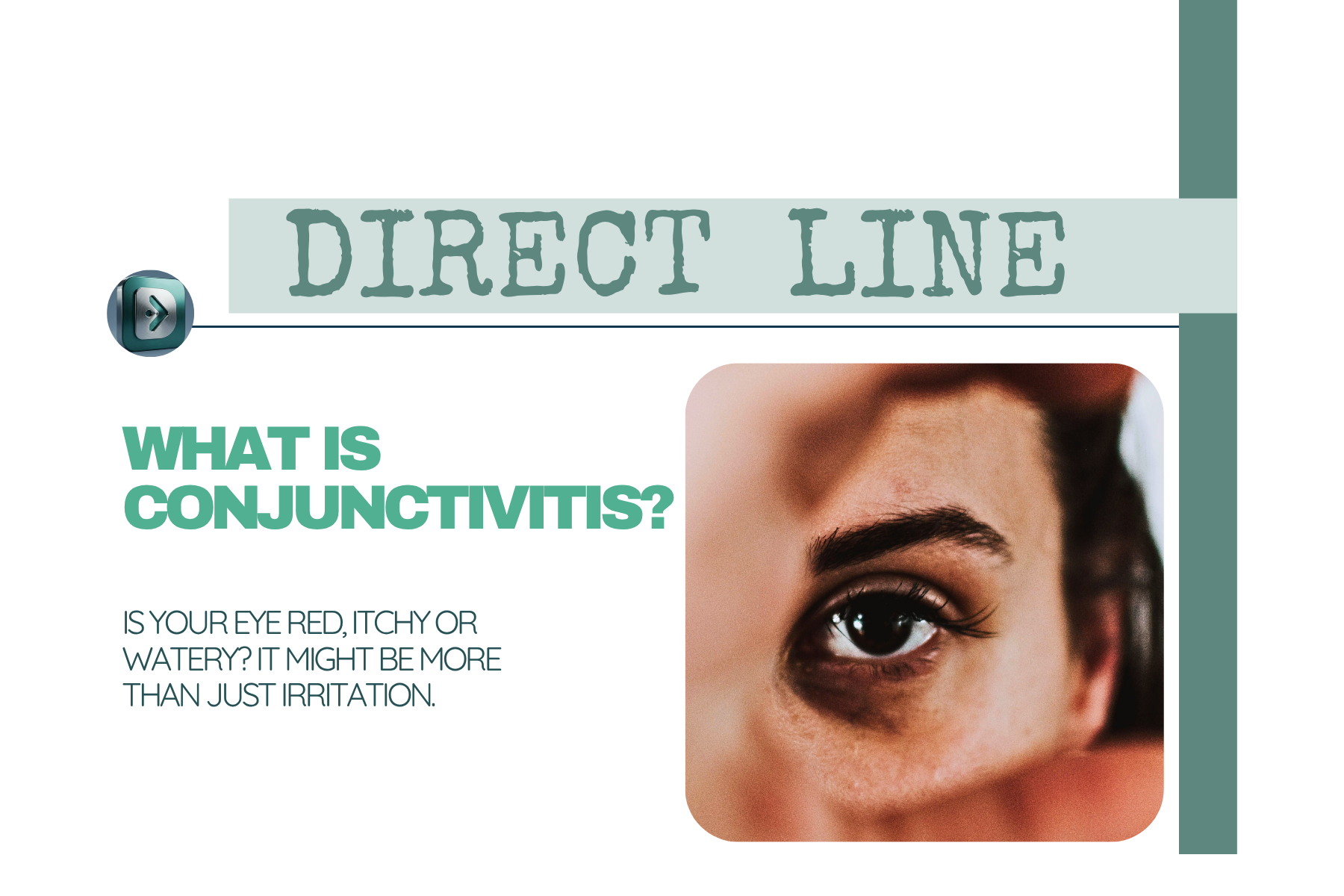
Is your eye red, itchy or watery? It might be more than just irritation.
You wake up one morning and notice one of your eyes looks bright red. It feels gritty, almost as if there's sand trapped inside, and it won't stop watering. By the next day, your eyelids are stuck together when you wake up, and the redness seems even worse.
About conjunctivitis
If this sounds familiar, you could have conjunctivitis, commonly known as pink eye.
Conjunctivitis is one of the most common eye conditions affecting both children and adults. Although it's usually mild, it can be uncomfortable and, in some cases, highly contagious. Knowing what causes conjunctivitis and how to treat it can help you recover quickly while protecting those around you.
Conjunctivitis is an inflammation of the conjunctiva, the thin, transparent membrane that covers the white part of the eye and lines the inside of the eyelids. When this delicate tissue becomes inflamed, the tiny blood vessels become more visible, causing the eye to appear red or pink.
Depending on the cause, conjunctivitis may affect one eye at first, before spreading to the other. Although the condition often looks alarming, most cases are not serious and improve with the right care.
Conjunctivitis can develop for several different reasons. Viral infections are the most common cause and often occur alongside a cold, flu or other respiratory infection. Viral conjunctivitis is highly contagious and spreads easily through close contact.
Bacterial conjunctivitis is caused by bacteria and often produces thicker yellow or green discharge that can cause the eyelids to stick together, particularly after sleeping. Allergic conjunctivitis develops when the eyes react to allergens such as pollen, dust mites, pet dander or mould. Unlike viral or bacterial conjunctivitis, allergic conjunctivitis is not contagious.
Eye irritation caused by smoke, chemicals, chlorine or foreign objects can also lead to inflammation that resembles conjunctivitis.
The most noticeable symptom is redness in one or both eyes. Many people also experience itching, burning or a gritty sensation, as though something is trapped inside the eye. Watery eyes are common, especially with viral or allergic conjunctivitis, while bacterial infections often produce thicker discharge that may dry overnight and cause the eyelids to stick together.
Some people develop mild swelling of the eyelids, increased sensitivity to light or blurred vision that improves after blinking away the discharge.
Although conjunctivitis can be uncomfortable, it shouldn't usually cause severe eye pain or significant loss of vision. If these symptoms occur, urgent medical assessment is needed.
The best treatment for conjunctivitis depends on the underlying cause. Viral conjunctivitis usually improves on its own within one to two weeks. During this time, gently cleaning away any discharge with clean cotton wool or gauze soaked in cooled, boiled water can help keep the eyes comfortable. Applying a cool compress may also reduce irritation.
If the conjunctivitis is caused by bacteria, your doctor may prescribe antibiotic eye drops or ointment if they are considered appropriate. Allergic conjunctivitis is usually treated by avoiding the allergen where possible and using allergy medication or medicated eye drops recommended by your healthcare provider.
While your eyes are healing, avoid rubbing them, as this can worsen irritation and spread infection. If you wear contact lenses, it's best to stop using them until your eyes have completely recovered.
Viral and bacterial conjunctivitis can spread easily through direct contact with infected tears, eye discharge or contaminated surfaces such as towels, pillowcases and makeup.
Washing your hands regularly, avoiding touching your eyes and not sharing personal items can help reduce the spread of infection. If you have conjunctivitis, replacing eye makeup and disinfecting contact lens cases after recovery is also recommended.
Allergic conjunctivitis, however, cannot be passed from one person to another.
Many cases of conjunctivitis improve without complications, but medical advice is important if your symptoms worsen, last longer than a week or are accompanied by severe pain, sensitivity to light or changes in vision.
You should also seek prompt medical attention if your eye becomes very swollen, you experience significant discharge that continues despite treatment or you wear contact lenses and develop a red eye, as this may indicate a more serious eye infection.
Babies with symptoms of conjunctivitis should always be assessed by a healthcare professional.
One of the most common questions is whether children with conjunctivitis should stay home from school. The answer depends on the cause and your school's policy. Because viral and bacterial conjunctivitis can be contagious, it's often best to keep children at home until they have been assessed and the risk of spreading the infection has decreased.
Many people also ask whether they can wear contact lenses during conjunctivitis. The answer is no. Contact lenses should be removed immediately and not worn again until the infection has completely resolved and your doctor advises it is safe.
Another frequent question is whether pink eye clears up without antibiotics. Viral conjunctivitis usually resolves on its own, while bacterial conjunctivitis may require antibiotic treatment depending on the severity and your doctor's assessment.
Protect Your Eye Health with DirectDoc
Red, irritated eyes can have several different causes, and not all of them require the same treatment. A qualified GP can assess your symptoms, help identify whether your conjunctivitis is likely viral, bacterial or allergy-related, and recommend the most appropriate care. With DirectDoc, you can consult a licensed doctor from the comfort of your home, office, university or while travelling. There's no need to wait in long queues when expert medical advice is only a few taps away.
Access care anywhere. Download DirectDoc today and get trusted healthcare whenever you need it.
DirectDoc makes it easier to speak with a doctor from home. Book an online consultation today.
Book an online consultation