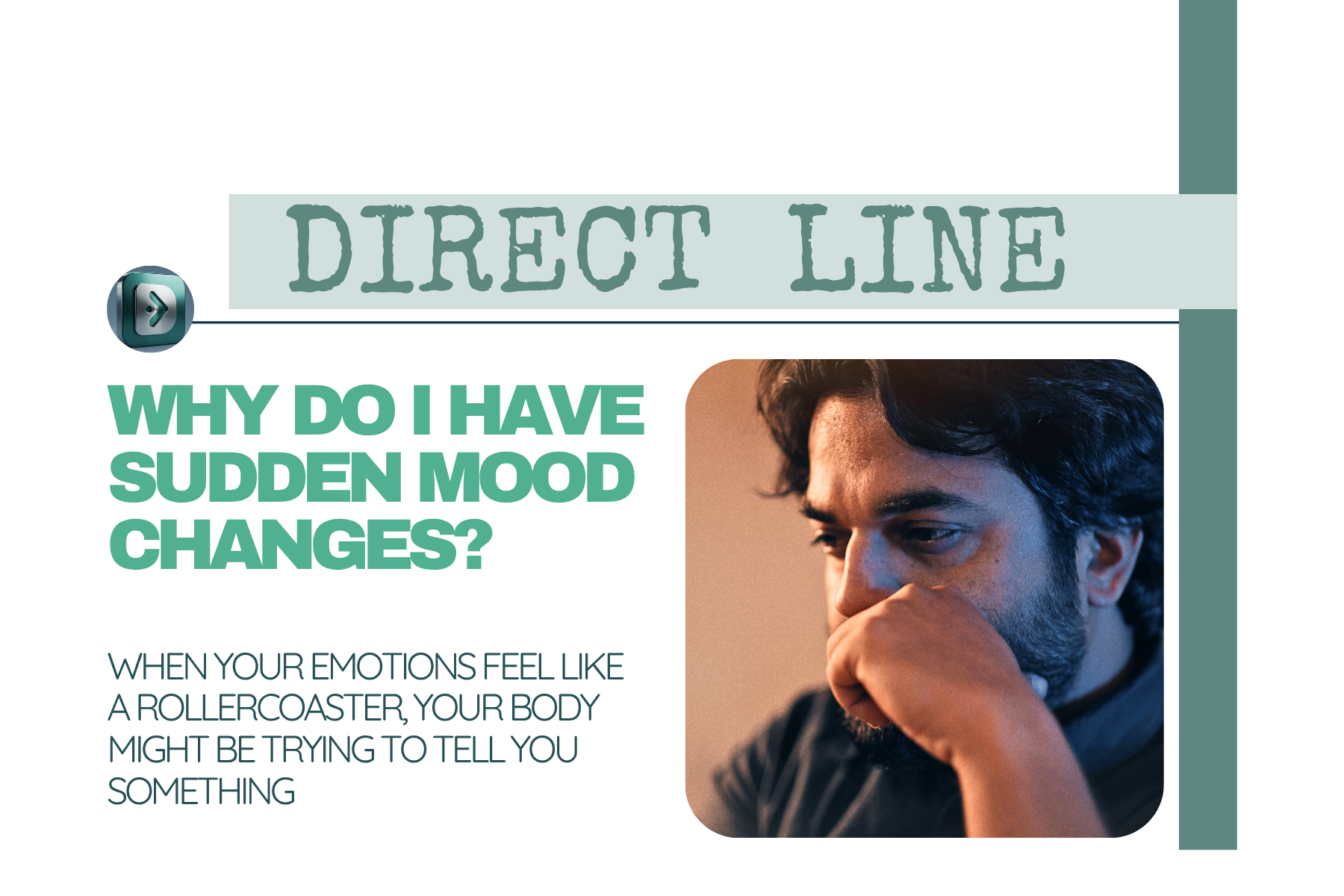
When Your Emotions Feel Like a Rollercoaster, Your Body Might Be Trying to Tell You Something
One moment you're laughing at a joke. The next, you're irritated by the smallest thing. Later, you feel anxious for no obvious reason, only to find yourself feeling completely fine an hour later. Sound familiar?
About mood
sudden mood changes: What You Need to Know
We've all had emotional ups and downs, but when your mood starts changing suddenly or more often than usual, it's natural to wonder: "What's going on with me?" The truth is, mood changes aren't always "just in your head." They can be your body's way of waving a small flag before it starts waving a bigger one. "Emotions are like the dashboard lights in a car. They don't always tell you exactly what's wrong, but they do tell you it's worth taking a closer look."
Mood changes are shifts in how you feel emotionally. They can happen over days, hours, or even minutes.
You might suddenly feel: Irritable, teary, anxious, overwhelmed, angry, unusually happy, demotivated, and emotionally exhausted
Everyone experiences mood changes from time to time. The key difference is how often they happen, how intense they are, and whether they're affecting your daily life. Sometimes It's Not Your Personality t's actually your body. It's easy to blame yourself, thinking that perhaps you are being emotional or perhaps overreacting.
Your body and your mind are constantly talking to each other. When one is out of balance, the other often notices first.
Think of your body as an orchestra. When every instrument is in tune, the music flows beautifully. But when one instrument falls out of rhythm, the whole performance changes. Mood is often one of the first places that imbalance appears.
There are common reasons for sudden mood changes.
Stress doesn't always arrive dramatically.
Sometimes it builds like water filling a bucket, drop by drop, until one final drop makes it overflow.
Work pressure, financial worries, relationship challenges, parenting, or caring for others can all contribute.
Your body keeps score, even when your mind tries to push through.
Poor Sleep. A restless night doesn't just leave you tired; it can leave your emotions running on empty.
Without enough quality sleep, the brain has a harder time managing emotions, making small frustrations feel much bigger.
Hormones influence far more than most people realise.
Mood changes can occur during: pregnancy, menstruation, perimenopause, or thyroid disorders.
Sometimes what feels like an emotional problem may actually have a physical cause.
Have you ever felt irritable when you're hungry?
There's a reason. Large swings in blood sugar can affect energy, concentration, and mood. Skipping meals or relying heavily on sugary foods may make emotional ups and downs more noticeable. Low levels of certain nutrients—such as iron, vitamin B12, or vitamin D—can contribute to fatigue, low mood, and difficulty concentrating.
Your body can't perform at its best if it's missing the building blocks it needs.
Sometimes ongoing mood changes may be linked to mental health conditions such as Anxiety disorder or Depression.
These conditions are common, treatable, and nothing to be ashamed of. Asking for help is a sign of strength and not weakness.
While every person's situation is different, these habits can help support emotional wellbeing:
Prioritise quality sleep. Eat balanced meals throughout the day. Stay hydrated. Make time for movement, even if it's just a walk.
Take regular breaks from screens. Talk to someone you trust. Create moments of calm in your day. Sometimes the smallest habits become the strongest foundations.
It’s time to seek medical advice if your mood changes: Are happening more often than usual. Affect your work, relationships, or daily life. Last for several weeks. Are accompanied by ongoing fatigue, weight changes, poor sleep, or physical symptoms. Leave you feeling hopeless, overwhelmed, or unable to cope. A healthcare professional can help identify whether your symptoms may be linked to stress, hormones, nutrition, an underlying medical condition, or your mental health.
You don't have to wait until things feel unbearable before asking for support.
With DirectDoc, you can speak to a qualified online doctor from the comfort of your home. They can assess your symptoms, discuss possible causes, recommend treatment where appropriate, and guide you on any further tests or referrals that may be needed.
Sometimes, the first conversation is the most important step.
Mood changes don't always mean something is seriously wrong, but they shouldn't always be ignored either.
Your emotions are part of your health, just like your heart, lungs, and muscles. "Your mind and body are dance partners. When one changes its rhythm, the other can't help but follow." Instead of dismissing how you feel, become curious about it. Listening to your body today may prevent bigger health concerns tomorrow.
DirectDoc makes it easier to speak with a doctor from home. Book an online consultation today.
Book an online consultation