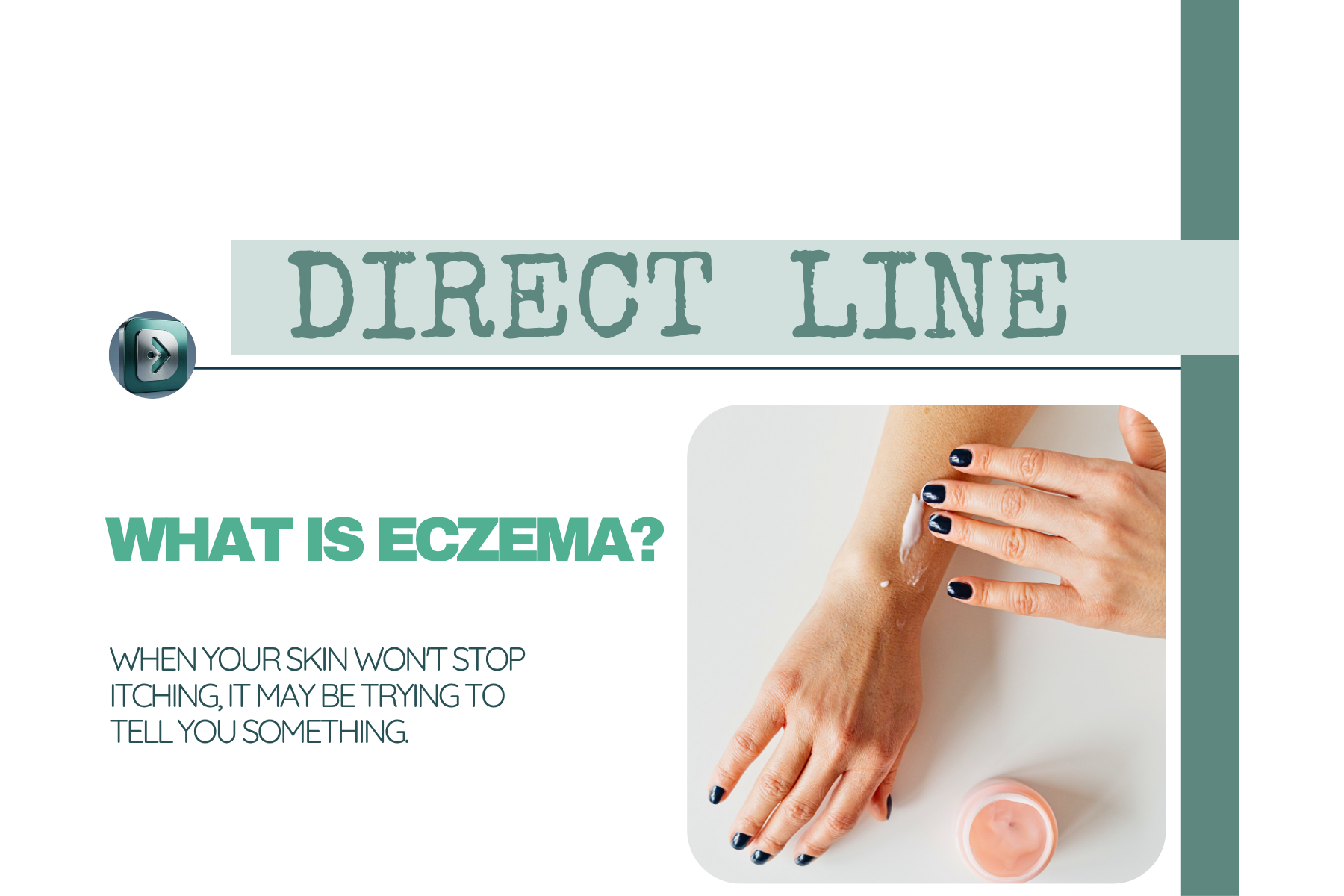
When your skin won't stop itching, it may be trying to tell you something.
Your skin feels dry, irritated and incredibly itchy. You scratch it, but that only seems to make things worse. Some days it settles down, while other days a flare-up appears out of nowhere. If this sounds familiar, you may be dealing with eczema.
About eczema
Eczema is a common skin condition that causes dry, itchy and inflamed skin. It can affect children and adults and may come and go throughout a person's life. Although eczema isn't contagious, flare-ups can be uncomfortable and frustrating, particularly when they interfere with sleep or everyday activities.
The good news is that eczema can usually be managed. Understanding what triggers your flare-ups and knowing how to care for your skin can make a significant difference.
Eczema is a condition that causes the skin to become dry, itchy and inflamed. The most common type is atopic eczema, also known as atopic dermatitis. Healthy skin acts as a protective barrier, helping keep moisture in while keeping irritants and allergens out. With eczema, this barrier doesn't work as effectively, which can leave the skin more vulnerable to dryness and irritation.
Eczema can appear anywhere on the body, although it commonly affects areas such as the hands, face, neck and the folds of the elbows and knees. The appearance can vary depending on your age and skin tone.
There isn't one single cause of eczema. It is thought to develop from a combination of genetic, immune-system and environmental factors. People with a family history of eczema, asthma or allergies may be more likely to develop the condition. However, everyday environmental factors can also trigger flare-ups
Soaps, detergents, fragrances, certain fabrics, very hot or cold weather, dry air and sweating can irritate sensitive skin. Stress can also make symptoms worse for some people. It's important to remember that eczema isn't caused by poor hygiene, and you cannot catch it from another person.
The most common signs are dry, itchy and irritated skin. During a flare-up, the affected area may become red, swollen or darker than the surrounding skin, depending on your natural skin tone. The skin may also become rough, cracked, scaly or thicker over time, particularly if it is repeatedly scratched. In some cases, small fluid-filled blisters can develop. The itching can be particularly troublesome at night, making it difficult to sleep. Constant scratching can also damage the skin and increase the risk of infection.
Eczema triggers are different for everyone. You may notice that your skin becomes worse after using a particular soap, shower gel, washing powder or cosmetic product. Heat and sweating can also trigger symptoms, while cold, dry weather may cause the skin to lose more moisture. Some people notice flare-ups during periods of stress. Allergies can also be associated with eczema, although not every eczema flare-up is caused by an allergy.
Learning what triggers your own symptoms can help you reduce future flare-ups.
There is currently no permanent cure for eczema, but treatment can control symptoms and reduce flare-ups. One of the most important parts of managing eczema is keeping the skin moisturised. Using a fragrance-free moisturiser regularly helps restore the skin barrier and reduce dryness. It is particularly helpful to moisturise shortly after bathing, while the skin is still slightly damp.
Your doctor may recommend a topical corticosteroid during a flare-up to reduce inflammation and itching. Other prescription treatments may be considered if eczema is severe or doesn't respond adequately to standard treatment.
Keeping showers or baths warm rather than very hot and choosing gentle, fragrance-free products can also help prevent additional irritation.
Eczema itself cannot always be prevented, particularly when genetics play a role. However, regular skin care can help reduce the frequency and severity of flare-ups. Moisturising consistently, avoiding known triggers and choosing gentle skincare products can help protect the skin barrier. Keeping fingernails short can also reduce skin damage if you scratch during an itchy flare-up.
The goal isn't to avoid everything that might possibly irritate your skin. Instead, identifying your personal triggers and developing a routine that works for you can make eczema much easier to manage.
If your eczema is affecting your sleep, daily activities or quality of life, it's worth speaking to a healthcare professional. You should also seek medical advice if your symptoms aren't improving with your usual skincare routine or if you're unsure whether the rash is actually eczema. Seek prompt medical attention if the affected skin becomes increasingly painful, warm, swollen or produces pus, or if you develop a fever. These can be signs of a skin infection that may require treatment. If your eczema is severe, widespread or frequently returning, a doctor can help you develop a longer-term treatment plan.
Many people wonder whether eczema is contagious. It isn't. Eczema cannot be passed from one person to another through touching, sharing clothing or being close to someone who has the condition.
Another common question is whether eczema is caused by an allergy. Allergies can sometimes contribute to eczema, particularly in children, but eczema and allergies are not the same thing. Many eczema flare-ups are triggered by irritation, weather, dryness or other factors rather than a specific allergy. People also ask whether they should stop moisturising when their eczema improves. In most cases, continuing regular moisturising is an important part of maintaining the skin barrier and reducing future flare-ups.
Take Care of Your Skin with DirectDoc Persistent itching and irritated skin don't have to become something you simply put up with. If you're unsure what is causing your rash or your eczema keeps returning, a qualified GP can assess your symptoms and recommend the most appropriate treatment. With DirectDoc, you can consult a licensed doctor from the comfort of your home, office, university or while travelling. Professional healthcare is only a few taps away when you need it. Access care anywhere. Download DirectDoc today and get the care you need, wherever life takes you.
DirectDoc makes it easier to speak with a doctor from home. Book an online consultation today.
Book an online consultation