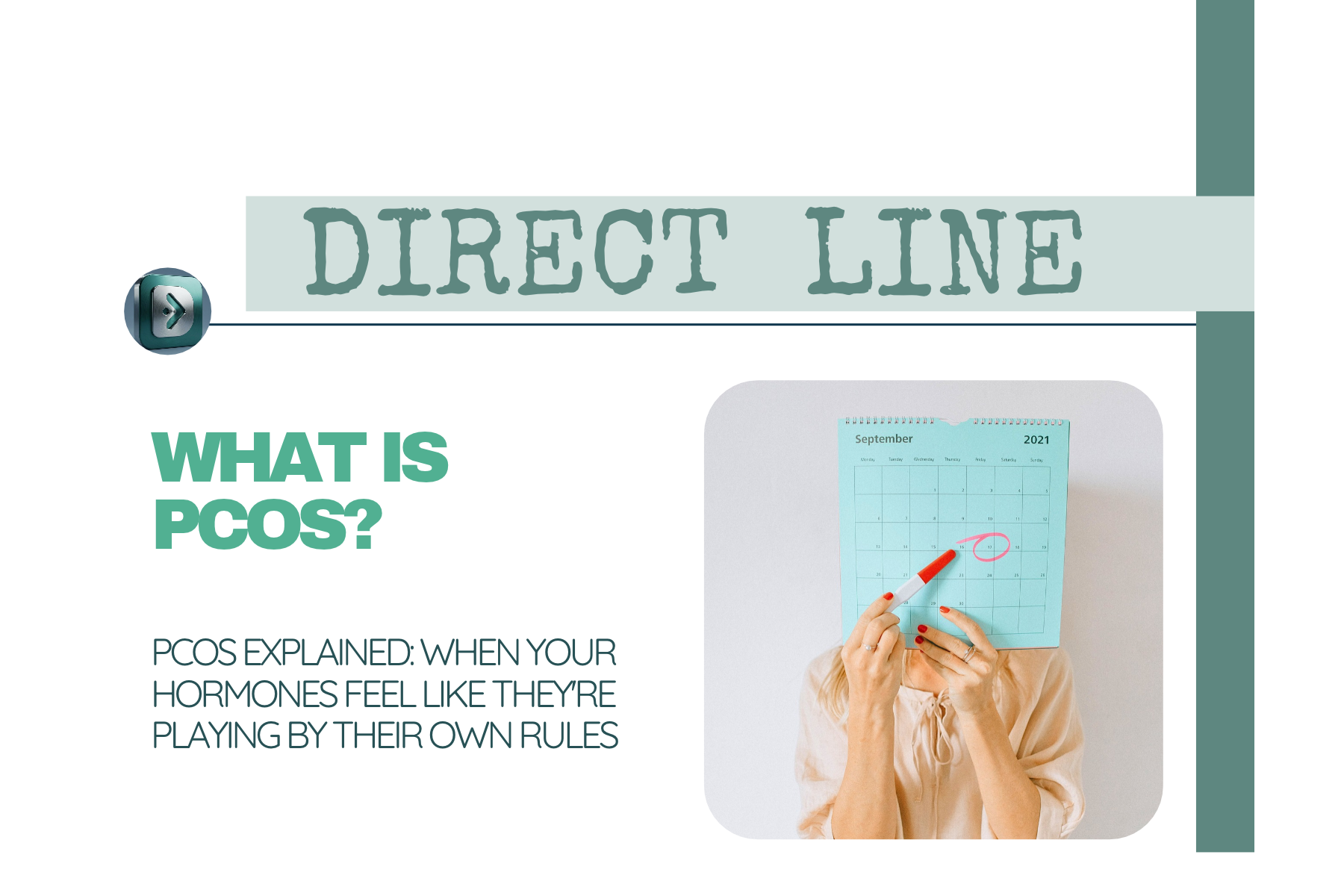
PCOS Explained: When Your Hormones Feel Like They're Playing by Their Own Rules
Your body isn't being difficult. It might be trying to tell you something.
About pcos
Ever feel like your body has its own calendar, its own beauty routine and its own idea of what your mood should be today?
One month, your period arrives on time. The next, it seems to have disappeared without leaving a forwarding address. You might notice more acne, extra hair growth in unexpected places or weight changes that leave you wondering what has changed.
Sometimes, these changes are more than an inconvenient part of life. They may be signs of polycystic ovary syndrome (PCOS), a common hormonal condition that affects how the ovaries function.
Let's break it down.
Think of your hormones as the members of an orchestra. When everyone plays in rhythm, your body's systems can work together as expected. But when some hormones fall out of sync, things can become a little unpredictable. PCOS is a hormonal condition that can affect menstrual cycles, ovulation and the way the body responds to certain hormones, particularly androgens. These are sometimes called "male hormones", but everyone produces them.
Despite its name, PCOS does not simply mean having cysts on your ovaries. Some people with PCOS have ovaries that appear to contain many small follicles on an ultrasound, while others do not. You can have PCOS without ovarian cysts.
PCOS doesn't look the same in everyone. For some women, the first clue is an irregular period. For others, it may be changes in their skin, hair or fertility. You might notice that your periods are irregular, infrequent or sometimes absent. Hormonal changes can contribute to persistent acne or oily skin, while higher androgen levels may cause thicker, darker hair to grow on the chin, upper lip, chest or abdomen. Some women also experience thinning hair on their scalp. Weight changes can occur, and some women find managing their weight more difficult. However, PCOS can affect people of all body sizes. PCOS can also interfere with ovulation, which may make falling pregnant more challenging for some women. These symptoms can have other causes too, so experiencing one or more of them does not automatically mean you have PCOS.
The exact cause isn't fully understood. Genetics, hormonal factors and insulin resistance can all play a role.
Insulin is the hormone that helps your body use sugar for energy. When the body becomes less responsive to insulin, it may produce more of it to compensate. In some women, this can contribute to higher androgen levels and disrupt ovulation.
Imagine your body's internal communication system sending messages, but some of those messages aren't being received as clearly as they should be. The result can be a menstrual cycle that becomes difficult to predict.
PCOS is not your fault. It isn't simply caused by eating the wrong foods, not exercising enough or failing to manage stress.
Can PCOS affect your health beyond your period? Yes. PCOS can affect more than your menstrual cycle.
Some women with PCOS have a higher risk of developing insulin resistance, type 2 diabetes, high cholesterol or high blood pressure. Having very infrequent periods over a long period can also increase the risk of the lining of the uterus becoming too thick. This doesn't mean these complications will happen to everyone with PCOS. It means that recognising the condition and checking your health regularly can make a difference.
There isn't one single test that confirms PCOS in every case. A healthcare professional will usually ask about your periods, symptoms and medical history. Depending on your situation, they may recommend blood tests to check hormone levels and assess blood sugar or cholesterol. An ultrasound may also be useful, but it isn't always necessary. Other conditions that cause similar symptoms may need to be ruled out.
I f your periods have become irregular, you've noticed new hair growth or you're struggling with persistent acne, it's worth discussing these changes with a healthcare professional rather than trying to diagnose yourself online.
Although there isn't currently a cure for PCOS, the symptoms can often be managed. The right approach depends on your symptoms, overall health and whether you're planning a pregnancy. Regular movement, balanced meals and consistent sleep can support your general health and may help with insulin resistance. You don't need to follow an extreme diet or completely overhaul your lifestyle overnight. Small, sustainable changes are often easier to maintain. Depending on your needs, a healthcare professional may recommend medication to regulate your periods, hormonal contraception, or treatment for acne and excess hair growth. If you're trying to conceive, fertility treatments can help some women with PCOS ovulate.
There is no single PCOS diet or treatment that works for everyone. Be cautious of products promising to "balance your hormones" or cure PCOS overnight. The aim is to find an approach that works for your body and your circumstances, with support from a qualified healthcare professional.
When should you speak to a doctor? Don't ignore persistent changes in your menstrual cycle or other symptoms that concern you. If your periods are repeatedly irregular or absent, you notice new or worsening hair growth, or you're experiencing persistent acne, a healthcare professional can help you understand what may be happening. If you go several months without a period and pregnancy isn't the reason, seek medical advice rather than assuming your cycle will eventually return to normal.
Seek urgent medical care if you experience sudden, severe pelvic or abdominal pain, especially with vomiting, fainting or heavy bleeding.
You don't have to wait until symptoms become overwhelming before asking questions about your health.
Your hormones aren't a mystery you have to solve alone PCOS can sometimes feel like your body has changed the rules without telling you. But understanding what is happening can help you feel more in control of your health. An irregular period, persistent acne or unexpected hair growth may be easy to dismiss as "just hormones". If these changes continue, they're worth paying attention to.
At DirectDoc, you can connect with a qualified online doctor in South Africa to discuss your symptoms and understand your next steps. An online consultation can help you decide whether you need further assessment, blood tests or an in-person examination.
Because looking after your health starts with asking the questions you've been putting off.
DirectDoc, Access Care Anywhere.
This article is for general information and does not replace an individual medical assessment or diagnosis.
DirectDoc makes it easier to speak with a doctor from home. Book an online consultation today.
Book an online consultation