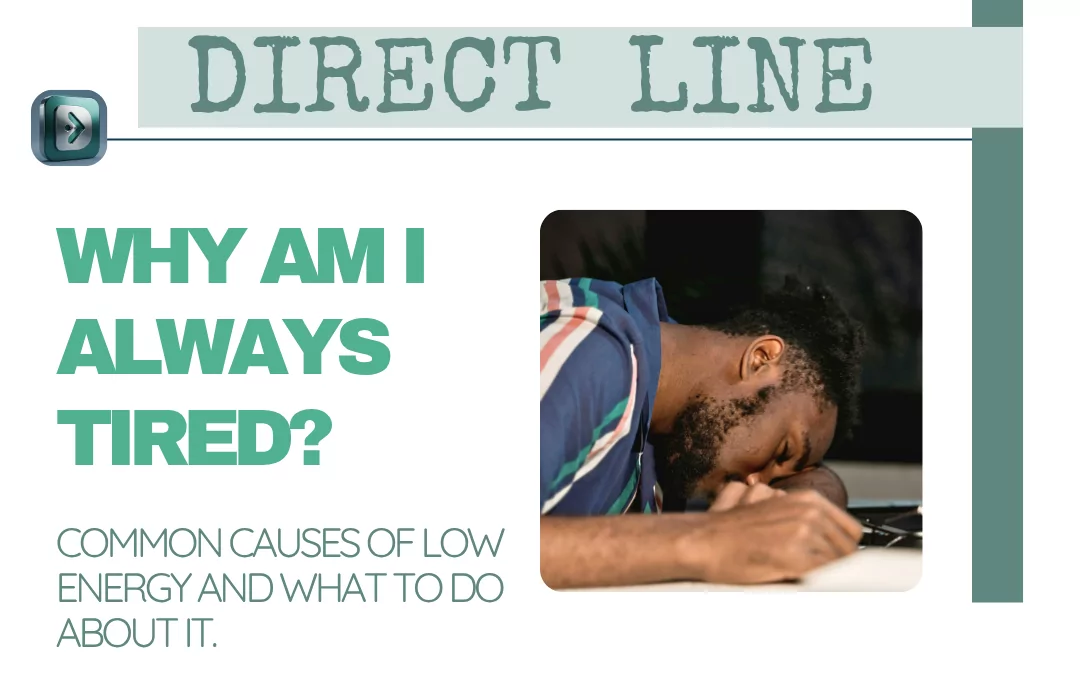
Are you living off more caffeine than you usually drink? Caffeine tends to be the drink of the day, and by afternoon the energy you may have had crashes once more. A common health complaint is feeling tired constantly. Your fatigue is not necessarily linked to a lack of motivation. Feeling tired all the time is worth understanding, as your body is most likely trying to tell you something.
Let’s break down what exactly fatigue is first. Feeling fatigued is more than just that sleepy feeling one gets. It could present itself and feel like: low physical energy, feeling mentally exhausted, a lack of motivation, your thinking being slower, and the usual tasks that came easy now requiring extra effort. You could feel tired in the body, or mind, and some people feel both.
Common causes of low energy
There are numerous reasons one may feel this way. Usually there is more than one factor contributing to it. The common reasons include:
- An irregular sleep routine
- Snoring or sleep disruption
- Too much screen time before bedtime
- Stress making your mind work overtime
When one has long-term stress, it can drain your energy levels greatly. Mental loads can show up physically. These signs show up as: a feeling of being overwhelmed, you’re irritable, lacking concentration, and having trouble simply relaxing.
Nutritional deficiencies and hydration
A lack of vitamins B12 and D, as well as low iron levels, can contribute to your fatigue. This is common if you are an individual who experiences heavy menstruation flow, diets that are restrictive, a poor appetite, or some issues affecting your digestive system.
Dehydration, even mildly, has a role to play. It contributes to tiredness, headaches, and poor focus. Your intake of food, if not consistent and too sugary, can create energy crashes. By eating balanced meals, it assists in maintaining stable energy.
Medical conditions linked to fatigue
There may be medical conditions linked to your lack of energy too. Persistent fatigue can be linked to:
- Type 2 Diabetes
- Hypothyroidism
- Depression
- Anxiety disorder
- COVID-19 recovery or post-viral fatigue
If your fatigue lasts more than a few weeks and gets worse, if it is affecting your day-to-day functioning, or if you experience weight changes, pain, dizziness, or mood changes alongside the tiredness, it is time to speak to a doctor. If rest does not help improve your symptoms, contact a doctor.
Practical tips to improve your energy
Energy levels can be improved with a few practical steps:
- Aim to protect your sleep with a consistent time to sleep and wake up
- Stay hydrated and do not simply drink water only when you feel thirsty
- Eat for steady energy with meals that have proteins, fibre, healthy fats, and slow-release carbohydrates
- Move your body, as it improves circulation and energy
- Allow for recovery time within your week; rest is productive when your body needs it
If you are too busy, drained, or struggling to find time, telehealth can make support easier. An online doctor consultation can help assess fatigue, guide your next steps, and decide if further testing is required. Feeling tired is common, but should not be ignored if it persists. Listening early can make a difference.
Book an online consultationDo not ignore persistent tiredness
Should this be your status, we recommend that you speak to a qualified doctor. DirectDoc is here and can assist from the comfort of your own home. Your body is always communicating — we help you understand what it is saying.