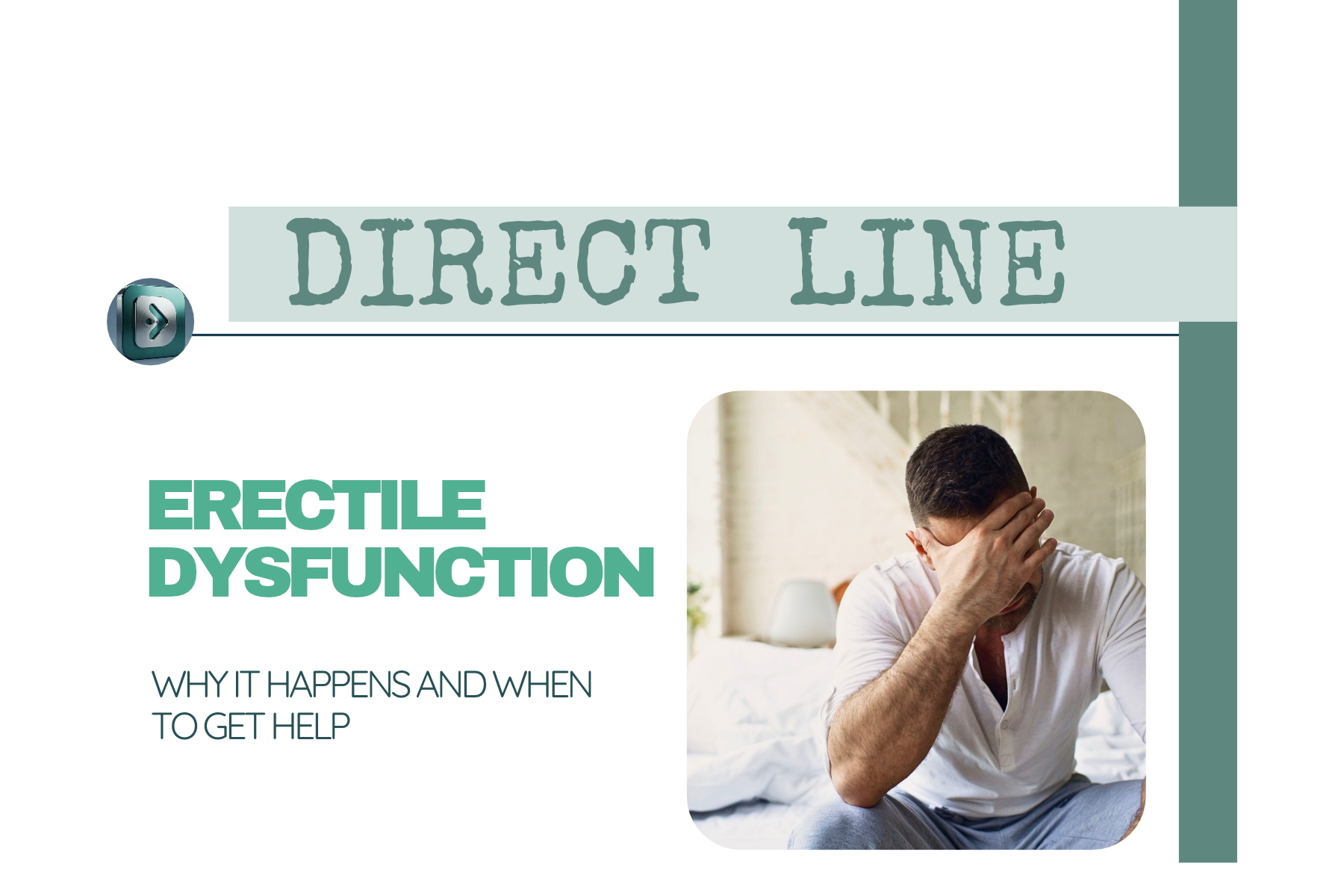
Why It Happens and When to Get Help
Some health concerns are easy to talk about. Others stay quiet behind closed doors.
About health
erectile dysfunction: What You Need to Know
There are certain things men may find easier to ignore than discuss. Erectile difficulties can be one of them.
Perhaps it happened once, and you blamed stress or a long day. Maybe it's happened more often, leaving you worried about what it means for your health, your confidence or your relationship. You might hope that if you don't think about it, it will sort itself out.
And sometimes, occasional erection difficulties do happen. But when the problem keeps returning, it's worth understanding why.
Erectile dysfunction (ED) is a common medical concern, and it is not something you need to feel ashamed of. It can have physical or psychological causes, and help is available. Let's talk about what erectile dysfunction means, what can contribute to it and when to speak to a doctor.
Think of an erection as a process that relies on several parts of the body working together. The brain, nerves, blood vessels, hormones and emotions all play a role. When you're sexually aroused, signals from the brain and nerves help increase blood flow into the penis. The blood becomes trapped temporarily, allowing the penis to become firm enough for sexual activity. If something interferes with this process, getting or maintaining an erection can become difficult. Erectile dysfunction refers to persistent or recurring difficulty getting an erection or keeping it firm enough for sexual activity. It doesn't mean that you aren't attracted to your partner, that you've lost your masculinity or that your sex life is over. It means something may be affecting a process that involves several systems in your body.
There isn't always one single cause. Sometimes, the problem is related to physical health. At other times, stress, anxiety or relationship difficulties may play a role. For many men, several factors overlap. Blood flow and heart health are particularly important. Conditions such as high blood pressure, high cholesterol and cardiovascular disease can affect the blood vessels needed for an erection. Diabetes can also damage blood vessels and nerves over time. This is one reason persistent erectile dysfunction deserves attention. In some cases, it may be an early sign of an underlying health problem that needs assessment. Hormonal changes can also contribute. Low testosterone may affect sexual desire and sometimes erectile function, although testosterone is not the explanation for every case.
Stress and anxiety can create another challenge. Worrying about whether you'll be able to get an erection can make you more anxious, which may make the difficulty more likely to happen again. It's a frustrating cycle, but one that can often be addressed with appropriate support. Depression, relationship difficulties, poor sleep, smoking, excessive alcohol use and certain medicines may also contribute.
Experiencing erectile difficulties doesn't automatically mean you have a serious medical condition. The important thing is to find out what may be causing them.
Imagine your body's response to sexual activity as a team effort. If one member of the team is struggling, the whole process can be affected. If erectile difficulties happen occasionally, tiredness, stress, alcohol or anxiety may be contributing factors. But if the problem becomes frequent, starts suddenly without an obvious explanation or continues over several weeks, it is worth arranging a medical assessment. You should also seek advice if you notice a drop in sexual desire, unusual fatigue, other hormonal symptoms or changes in your general health. Don't assume the problem is purely psychological, and don't assume it's definitely physical. A healthcare professional can help you explore the possible causes without jumping to conclusions.
Erectile dysfunction can be treated. The most suitable treatment depends on the underlying cause, your general health and any medicines you take. For some men, improving sleep, increasing physical activity, stopping smoking or reducing alcohol consumption may support erectile function and cardiovascular health. Managing conditions such as diabetes or high blood pressure can also be important. Medication may help improve blood flow to the penis. Medicines are used for erectile dysfunction, but they aren't suitable for everyone. They can be dangerous when taken with medicines used for certain heart conditions, and a doctor or pharmacist should check whether treatment is safe for you.
If stress, anxiety or relationship concerns are contributing, counselling or psychological support may help. If a hormonal problem is suspected, a doctor may recommend appropriate testing before discussing treatment. Be careful with online products that promise instant results or claim to boost sexual performance naturally. Some may contain undisclosed ingredients or interact dangerously with other medicines. You don't need to experiment with unverified treatments when safer, evidence-based options are available.
Talking about erectile difficulties may feel uncomfortable at first, but healthcare professionals discuss sexual health concerns regularly.
You can start by explaining when the problem began, how often it happens and whether you've noticed other symptoms. Mention any medicines or supplements you take, as well as any known health conditions. Your doctor may ask about your general health, stress levels, sexual desire and whether you experience erections at other times, such as in the morning. Depending on your situation, a physical examination or blood tests may be recommended. These questions help build a clearer picture of what's happening. They're not a judgement about your masculinity or your relationship. Remember, seeking help doesn't mean you must immediately agree to a particular treatment. It means understanding your options and making an informed decision about your health.
Arrange a medical consultation if erection difficulties keep happening, are affecting your confidence or relationships, or are accompanied by other changes in your health. Seek emergency medical care if you have an erection lasting four hours or longer, particularly if it is painful. This can cause permanent damage if not treated promptly. If you experience chest pain, severe shortness of breath or other concerning symptoms during sexual activity, stop and seek urgent medical assistance. Your sexual health is part of your overall health, and it's worth treating it that way. You don't have to let embarrassment make the decision for you.
Erectile dysfunction can feel personal, but it is a medical concern that affects many men. It doesn't define your worth, your masculinity or your ability to have a fulfilling relationship. Ignoring it may delay treatment for an underlying condition. Talking about it can be the first step towards understanding what's happening and finding an approach that works for you.
At DirectDoc, you can connect with a qualified online doctor in South Africa to discuss erectile difficulties and your sexual health in a private consultation. A doctor can help assess your concerns, discuss possible causes and advise whether an in-person examination or further testing is needed. You don't have to keep guessing or feel that you need to handle it alone.
DirectDoc, Access Care Anywhere.
This article is for general information and does not replace an individual medical assessment or diagnosis.
DirectDoc makes it easier to speak with a doctor from home. Book an online consultation today.
Book an online consultation