
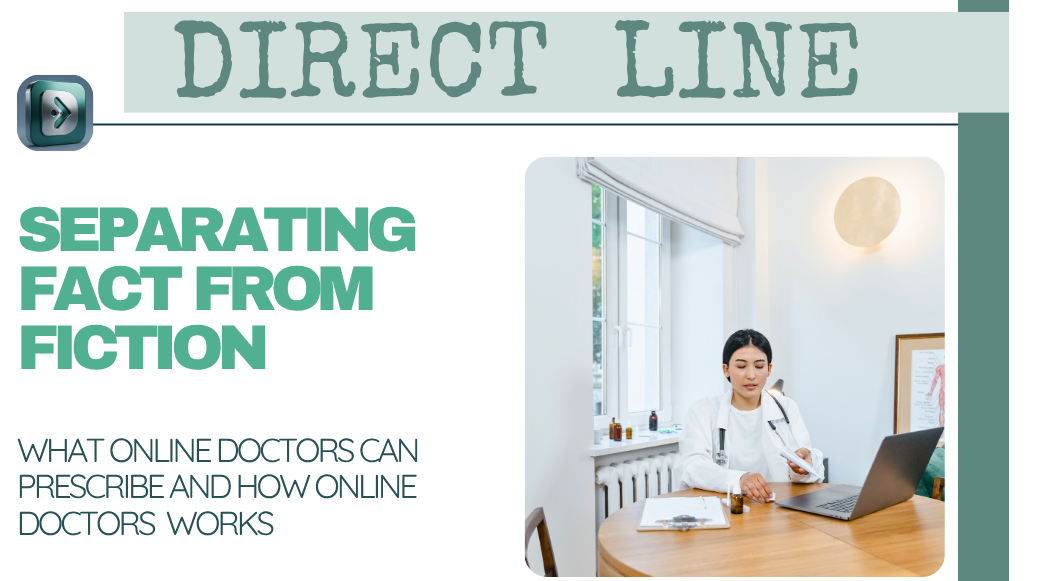
Telehealth has transformed the way people access healthcare. From booking appointments online to consulting with a doctor from the comfort of your home, medical care has become more convenient than ever before. Yet one question continues to surface time and time again: ‘Can an online doctor actually prescribe medication?
The short answer is yes. In many cases, online doctors can prescribe medication when it is clinically appropriate. However, there are important rules, regulations, and limitations designed to keep patients safe. At DirectDoc, we often encounter patients who are surprised to learn just how much can be managed through a virtual consultation. While telehealth is not suitable for every situation, it can be an effective and convenient manner to access professional, medical advice and treatment.
An online consultation is much like a traditional doctor’s appointment, except the consultation takes place through a secure digital platform. The doctor will discuss your symptoms, ask questions about your medical history, review any relevant information, and assess your condition. Think of it as detective work in a white coat. Every question helps build a clearer picture of what may be happening. Once the doctor has enough information, they can recommend treatment, advise on further investigations, or determine whether medication may be appropriate. The consultation may happen online, but the medical standards remain exactly the same.
Registered doctors on an online platform can prescribe many types of medication during an online consultation; when they believe it is safe and appropriate to do so. The decision is never based on convenience alone. Just like an in-person consultation, the doctor must first assess the patient and make a professional, clinical judgement. A prescription is not simply a piece of paper; it is a medical decision that carries responsibility. Whether a doctor is sitting across a desk, or speaking through a screen, that responsibility remains unchanged.
You may be wondering which types of medication can be prescribed. Many common medical conditions can be assessed and treated through telehealth. Depending on the patient’s circumstances, doctors may prescribe medication for conditions such as: respiratory infections, allergies, skin conditions, digestive complaints, urinary tract infections, chronic disease management, and certain mental health conditions. If a patient requires ongoing treatment for conditions such as high blood pressure, asthma, or diabetes, an online consultation may also be used to review treatment plans, and provide repeat prescriptions where clinically appropriate. The goal is not to replace healthcare, but to bring healthcare closer to where patients are.
There are certain medications that cannot be prescribed to patients. Certain medications are subject to stricter regulations, and may require an in-person assessment before they can be prescribed. This is particularly true for medicines with a higher risk of: misuse, dependence, or significant side effects.
Healthcare regulations exist for a reason. Just as a pilot follows safety procedures before take-off, doctors must follow professional guidelines before issuing prescriptions. If an online doctor believes face-to-face examination is necessary, they will advise the patient accordingly.
In many cases an online prescription is the same as a traditional prescription. Electronic prescriptions have become increasingly common and can often be sent directly to patients or pharmacies, depending on local regulations and healthcare systems. The prescription itself carries the same professional accountability as one issued during a physical consultation. The technology may be modern, but the medical responsibility behind it remains unchanged.
Patients are sometimes disappointed when a doctor does not prescribe the medication they expected. However, a prescription is never guaranteed. A doctor may decide to not prescribe medication if: the diagnosis is unclear, further testing is required, an in-person examination is needed, the medication is not clinically appropriate, or there are concerns about safety or interactions. Good medical care is not about prescribing something at every visit. Sometimes the safest prescription is additional investigation, or a different treatment approach altogether.
For many patients, altogether telehealth offers a level of convenience that was difficult to imagine just a few years ago. Instead of spending time travelling, sitting in waiting rooms, or taking off work, patients can now often access medical advice and treatment for their exact location. No need to travel, but the possibility to simply consult from home, the office, or even while travelling. For those individuals who manage chronic conditions, telehealth can and does make ongoing healthcare feel less like climbing a mountain, and more like taking manageable steps forward.
Telehealth is a step forward in assisting with saving time, improved accessibility, and connecting patients with healthcare professionals when they need support.
Although virtually telehealth is a powerful tool, but it is not designed for every medical situation. Certain conditions require a physical examination, diagnostic testing, imaging studies, or emergency medical care. Symptoms such as: chest pain, difficulty breathing, major injuries, sudden neurological symptoms, or other medical emergencies do require immediate in-person attention. An online doctor will always prioritise patient safety, and recommend face-to-face care when necessary.
DirectDoc, provides online GP consultations to patients for convenient access to qualified doctors. Doctors access symptoms, provide medical advice, discuss treatment, and prescribe medication when appropriate. Healthcare should fit into modern life without compromising quality or safety. The idea that online doctors cannot prescribe medication is one of the most common myths surrounding telehealth. In reality, qualified doctors can prescribe many medications, when clinically approved. Technology may have changed, but it does not change the principles of good medicine. Sometimes the doctor may be a few clicks away, but the care remains every bit as real.
DirectDoc Health Blog South Africa
DIRECT LINE
Medical & Health Blogs

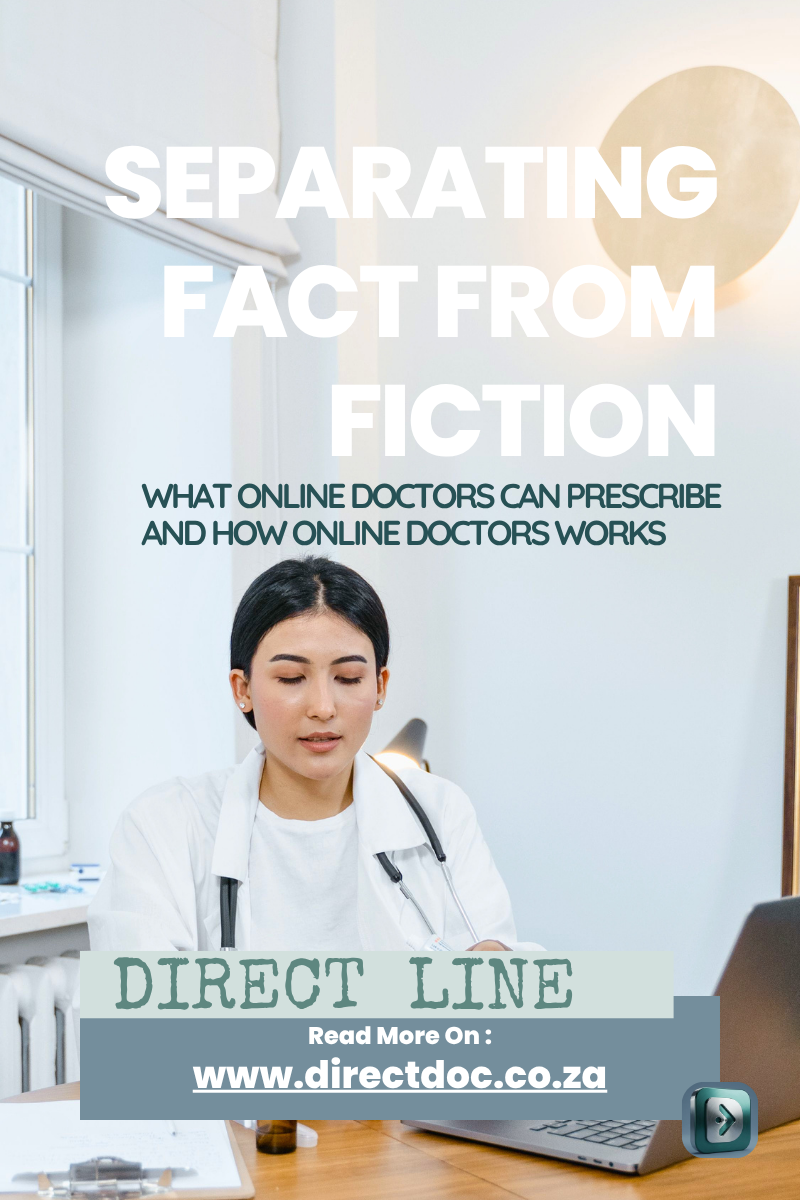
Separating fact from fiction.

When your stomach keeps waving the white flag.

Direct Line Health Blogs
Your body is always communicating.
We help you understand what it’s saying.
Is online doctor consultation safe?
WHY AM i ALWAYS TIRED?
Direct Line Health Blogs
Your body is always communicating.
We help you understand what it’s saying.

When a sore throat stops being ‘normal’
How to recognise the causes of chronic throat discomfort before it worsens

Anxiety taking over your life?

More than just ‘high sugar’

Welcome to the future
Your Doctor in
Your Hands
How Online Doctor Consults Works

Download The DirectDoc Online Doctors App
Login and Book An Appointment
A Doctor will Call You.


Revolutionizing Primary Healthcare

Your Health and Your Family wellbeing is our priority

Unlock A World of Easy Healthcare and Doctor Consultations

Free Chat Support
Get instant answers from qualified allied health professionals at no cost.

Virtual Doctor Consultations

Virtual Allied Health Professionals Consultations

Home Blood Work
Request blood tests from the comfort of your home. No more travelling to labs.

Access Local Pharmacy
Direct and efficient scripting to local pharmacies with medication delivery to your door.

Pill Tracker
Keep track of your chronic medication with reminders and schedules to never miss a dose.

Extensive Primary Health Professionals Platform
Access GP Doctors, Psychologists, Dieticians, Counsellors, Nurses, Physiotherapists, Occupational Therapists, and more.

Consultations in Real Time

Direct Line Health Blogs
Your body is always communicating.
We help you understand what it’s saying.
Quick Health Blogs Links
- WHY AM i getting headaches so often?
- WHY AM i ALWAYS TIRED?
- What many people don’t realise could be tuberculosis
- YOUR GUT MIGHT BE RUNNING THE SHOW
- GLAUCOMA – THE SILENT THIEF
DirectDoc App Updates
Contact Details


Copyright © 2026. DirectDoc